
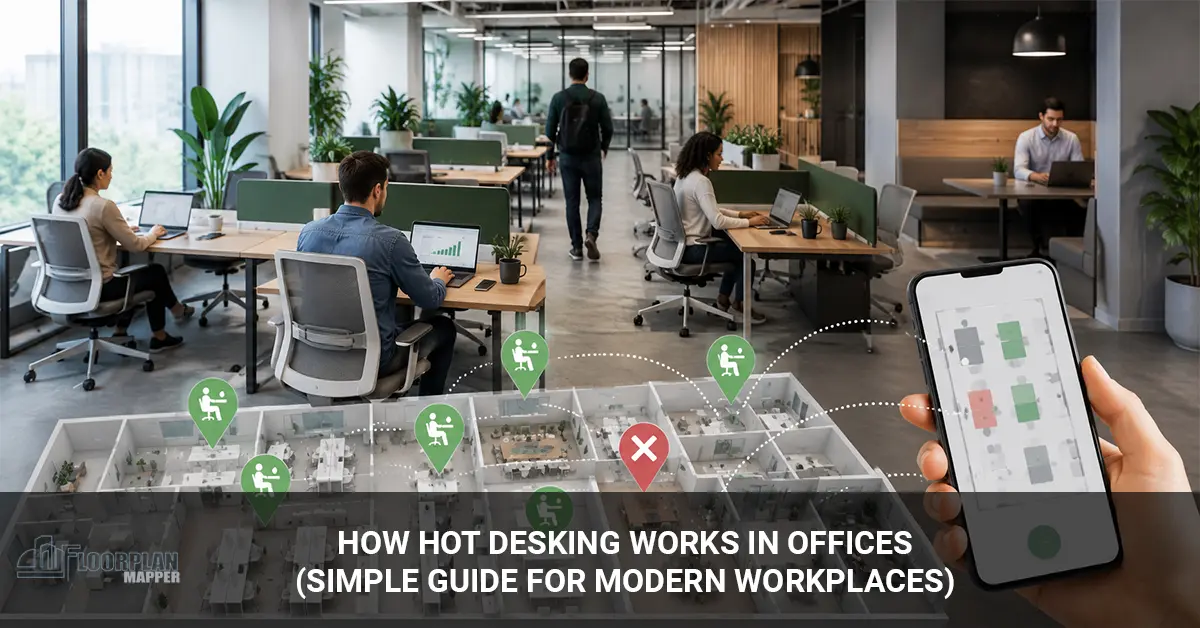
Hot desking lets employees use any available desk instead of a fixed one.
Offices today are more flexible than before. People don’t come in every day, so many desks stay empty. This creates waste and confusion.
Hot desking solves this in a simple way. Employees choose a desk when they arrive or book one ahead of time. There is no permanent seating.
This system helps companies use space better and cut unnecessary costs. At the same time, employees get more freedom to choose where they work.
In short, hot desking keeps the office flexible, organized, and easier to manage.
What Is Hot Desking?
Hot desking is a seating system where employees use any available desk instead of having a fixed one.
Employees don’t sit in the same place every day. They choose a desk when they arrive or book one in advance. This makes it easy to work in a shared office without assigned seating.
It replaces traditional setups with a flexible workspace that adjusts to daily needs and changing schedules.
How Hot Desking Works in Offices
Hot desking works by letting employees use any available desk on the day they come in.
The system is simple. Desks are shared, and availability changes in real time. Employees either pick a desk when they arrive or reserve one ahead of time.
Employees Choose a Desk When They Arrive
Employees choose any open desk when they enter the office.
Some offices use a first-come system where people take what’s available. Others use booking tools so employees can reserve a desk before arriving.
Both methods remove fixed seating and keep the workspace flexible and easy to manage.
Desk Booking System or Manual Setup
Hot desking can run with a booking system or simple manual rules.
Many companies use desk booking software to handle reservations and avoid conflicts. It shows which desks are free and lets employees book in advance.
Smaller teams may manage it with shared calendars or basic guidelines. This works for simple setups, but can become confusing as the team grows.
Using software keeps everything clear, reduces errors, and makes the process easier to manage.
Shared Workspace Setup
Hot desking works best when all desks are set up in the same way.
Each workstation should have similar equipment so anyone can sit down and start working right away. This usually includes a monitor, chair, and basic tools.
A consistent setup removes friction. Employees don’t need to adjust to a new setup every time, which makes the experience smooth and comfortable.
Flexible Seating Rotation
Flexible seating rotation means employees use different desks based on availability.
They don’t sit in the same spot every day. Instead, they choose a desk depending on who is in the office and what’s available.
This approach encourages movement and helps teams mix more often. It also keeps desks from being tied to one person, which improves space usage and flexibility.
Check-In and Usage Rules
Hot desking works best when employees follow simple check-in and usage rules.
Employees may need to check in when they arrive or confirm they are using a desk. This keeps the system accurate and avoids confusion.
Clear guidelines help prevent desks from being saved but not used. They also make sure everyone gets fair access to available spaces.
With simple rules in place, the system stays organized and runs smoothly every day.
Key Features of a Hot Desking Setup
A hot desking setup includes simple features that keep shared desks organized and easy to use. The goal is to make sure any employee can sit down and start working without confusion or delay.
Key features include:
- Flexible seating with no assigned desks
- Clean desk policy so spaces stay ready for the next person
- Shared equipment across all workstations
- Optional desk booking tools for better control
These features keep the workspace consistent, reduce friction, and make daily office use smooth.
Benefits of Hot Desking
Hot desking helps businesses use office space better while giving employees more flexibility.
It reduces empty desks and makes sure space is used efficiently. This can lower costs and help companies get more value from their office.
Employees get the freedom to choose where they sit. This can improve comfort, help them focus, and make it easier to work with different team members.
It also supports hybrid work. People can come into the office when needed without worrying about fixed desks or availability.
Challenges of Hot Desking
Hot desking can be challenging without clear rules and proper planning.
Some employees may find it hard to adjust because they no longer have a personal desk. Not having a fixed space for belongings can feel uncomfortable at first.
There can also be confusion about which desks are available, especially if there is no booking system in place. This can lead to delays or frustration during busy office days.
Simple policies, clear communication, and the right tools can reduce these issues and make the system easier to use.
Hot Desking vs Fixed Seating
Hot desking gives flexibility, while fixed seating gives consistency.
Fixed seating assigns each employee a permanent desk. This makes daily routines simple but often leaves desks unused when people are not in the office.
Hot desking allows employees to choose a desk based on availability. This improves space usage but needs clear rules and some planning to work smoothly.
The best option depends on your team’s work style, office usage, and need for flexibility.
Who Should Use Hot Desking?
Hot desking is ideal for teams that don’t need a fixed desk every day.
It works best in flexible work environments where office space is shared, and schedules change often.
It is a good fit for:
- Hybrid teams with flexible schedules
- Startups and growing businesses
- Co-working spaces
- Companies with unused office space
Even smaller teams can benefit if they want to use space better and avoid empty desks.
Best Practices for Hot Desking
Hot desking works best when you set clear rules and keep the process simple.
Employees should know how to find, use, and leave a desk without confusion. A structured setup makes daily use smooth and avoids conflicts.
Follow these best practices:
- Use desk booking software to manage reservations
- Set simple rules so everyone understands how desks are used
- Provide enough shared equipment at each workstation
- Maintain a clean desk policy so spaces stay ready
These steps keep the system organized, fair, and easy for everyone to follow.
Common Use Cases
Hot desking is used to manage shared office space in flexible work environments.
It works well in setups where employees don’t need a fixed desk every day and schedules change often.
Common use cases include:
- Hybrid offices where employees rotate office days
- Remote-first companies that use the office occasionally
- Project-based teams that change frequently
- Flexible workplaces with shared seating
It adapts easily to different work styles and helps businesses stay efficient as needs change.
Is Hot Desking Right for Your Office?
Hot desking is right for your office if you have unused desks and flexible work schedules.
It works best when employees don’t need a permanent workspace and are comfortable sharing desks. Teams that rotate office days or follow hybrid work models benefit the most.
It may not be a good fit for roles that need fixed setups or personal equipment that cannot be moved easily.
Before deciding, look at how your team works, how often the office is used, and how much space goes unused. This helps you choose the right setup for your workplace.
Final Thoughts
Hot desking makes office space more flexible and easier to manage.
It reduces unused desks, supports hybrid work, and gives employees more freedom to choose where they sit. This leads to better use of space and smoother daily operations.
With clear rules and the right tools, it becomes simple to run and easy for teams to follow.
As workplaces continue to change, hot desking remains a practical and effective solution for modern offices.

